

How much blue can you handle?
Blue waters, amazing seabed, mountainous villages with white houses, cute taverns and probably the loveliest Chora of the Cyclades.
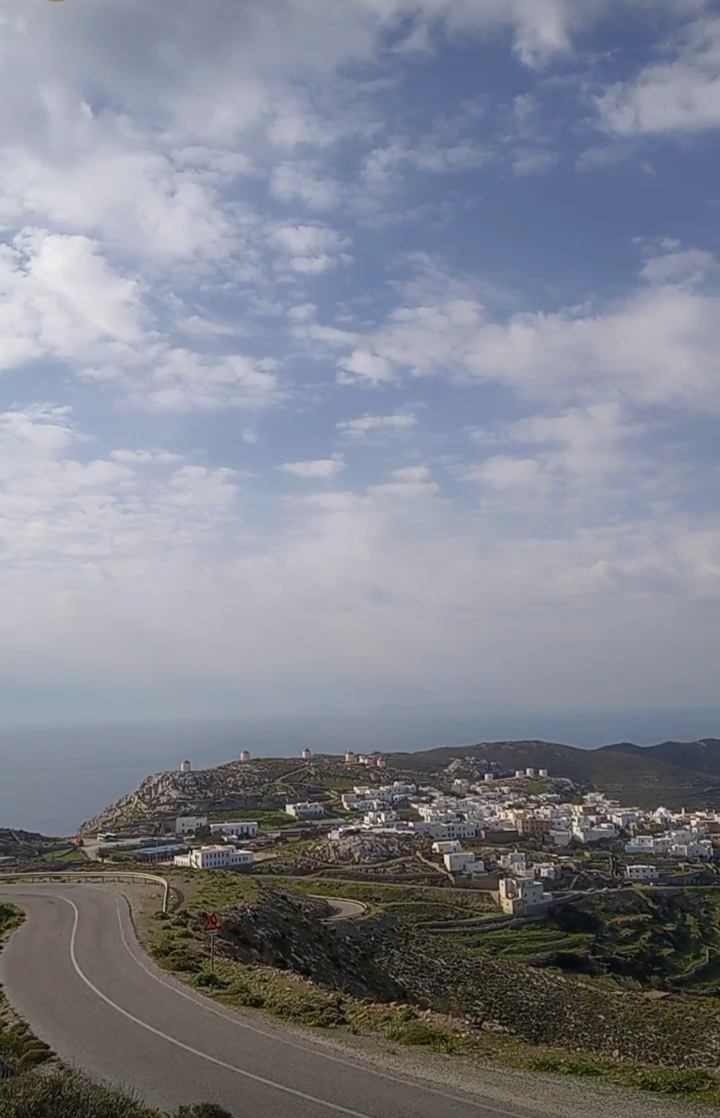
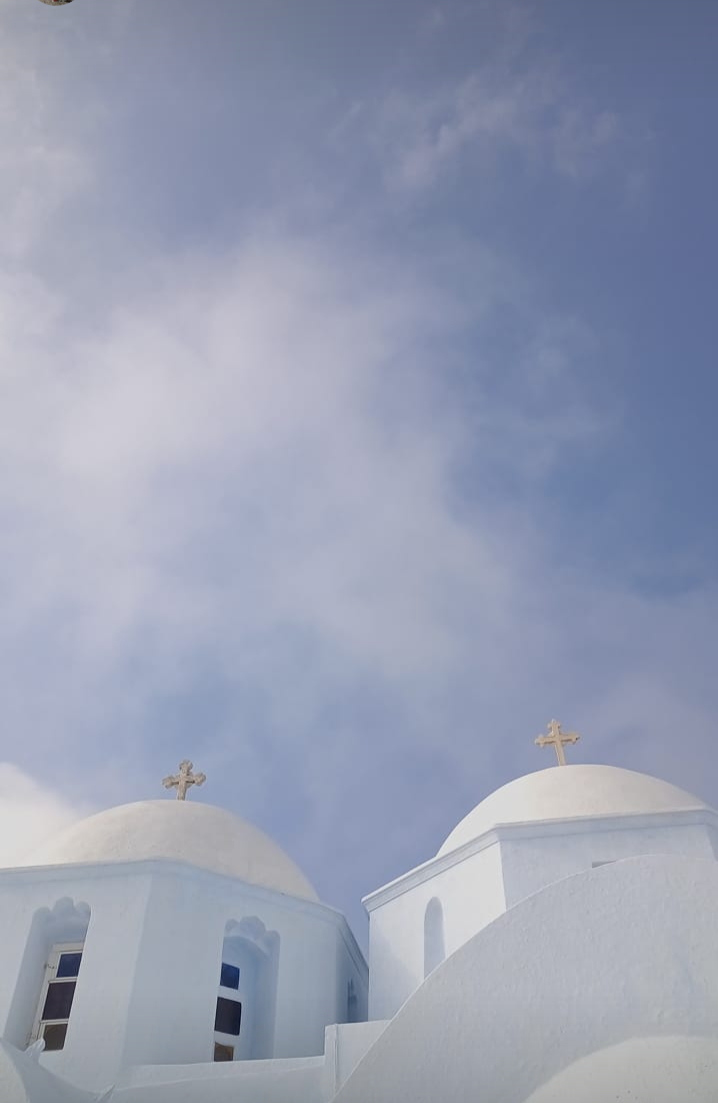
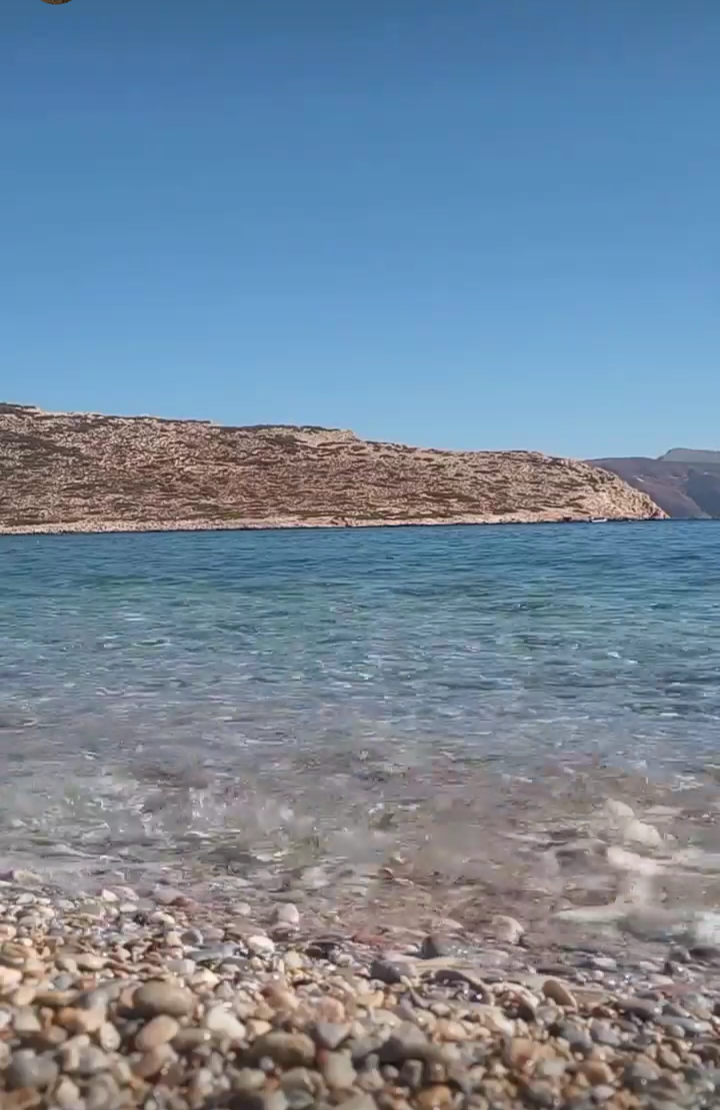
Covered in small bays, mountainous paths and white churches, Amorgos has been (for a while now) an alternative destination with devoted fans.
In fact, it now welcomes the third generation of visitors since 1988, when Amorgos became widely known to the public – both within and outside Greece – due to the first shot of the famous “The Big Blue” film by French director Luc Besson.
An ideal place for exploration, diving and snorkelling, and a heaven for hikers, Amorgos is known for its wild beauty: a land that expresses the tradition of the Aegean Sea being, at the same time, a place of more modern, youthful, carefreeness, combined with the disarming honesty and politeness of its residents.
History
In antiquity Amorgos was one of the first places from which the Ionians passed onto the Greek mainland. An important number of artifacts (stone tools, tombs, statues, coins, building remains) clearly indicates that the island was inhabited since before 3200 BC (early Cycladic civilization) and that three ancient cities with autonomous constitution and their own currency existed: Aegiali in the north, Minoa at the centre of the island and Arkesini in the south, all three built in the west coast where the morphology and natural bays favored the growth of coastal settlements and forts.
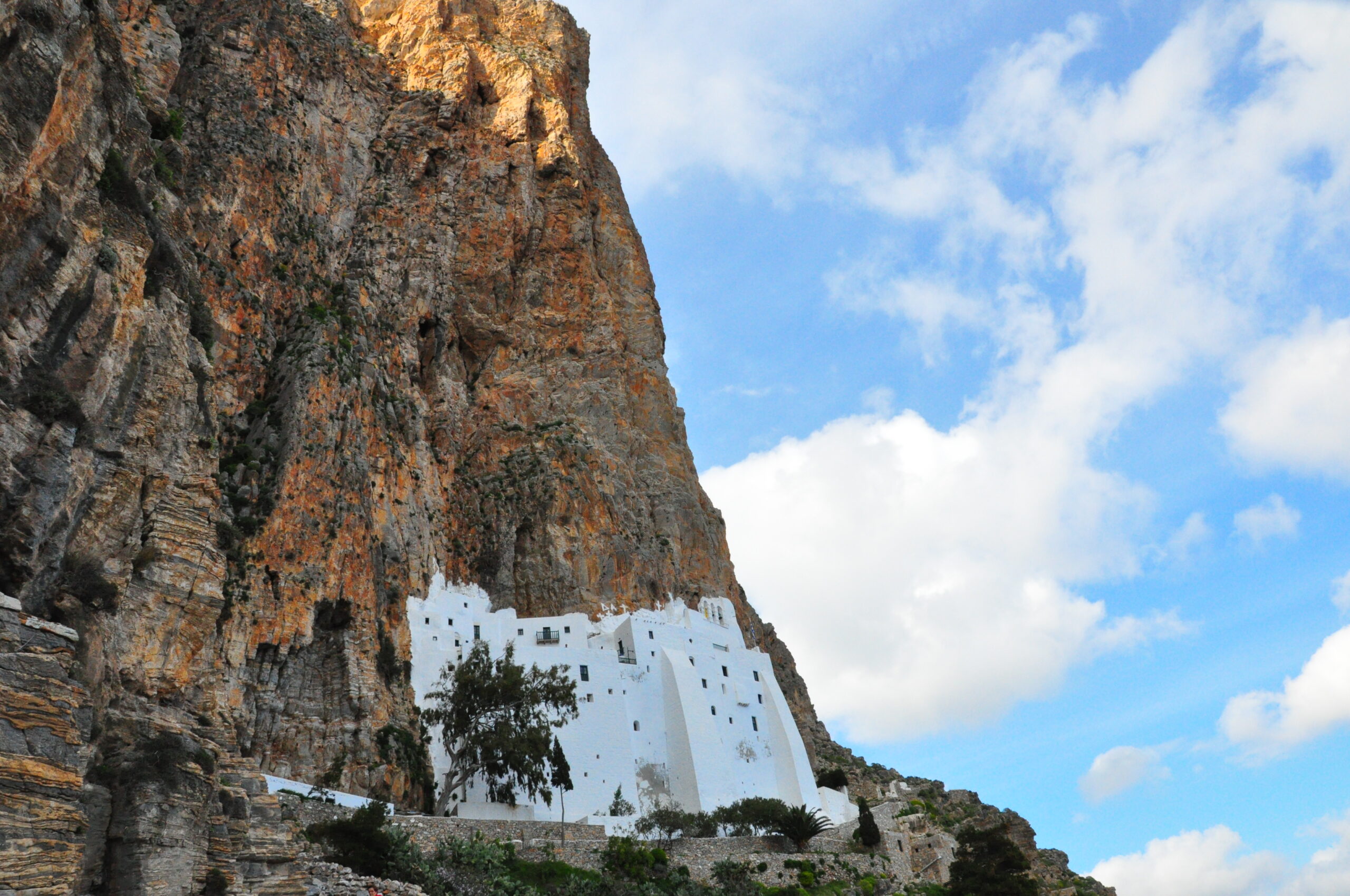
The Monastery
The Monastery was built on the occasion of the finding of the miraculous icon of the Virgin in Amorgos, coming from the Hozova region of Palestine, in the 9th century AD. It was officially founded by the Emperor of Byzantium, Alexios I Komnenos, in 1088 AD. It is celebrated every year on November 21.
The monastery is open every day from 08.00-13.00 and from 17.00-19.00 (except August 6).
Women have to wear skirts and cover their shoulders.
Men have to wear pants.
Sights
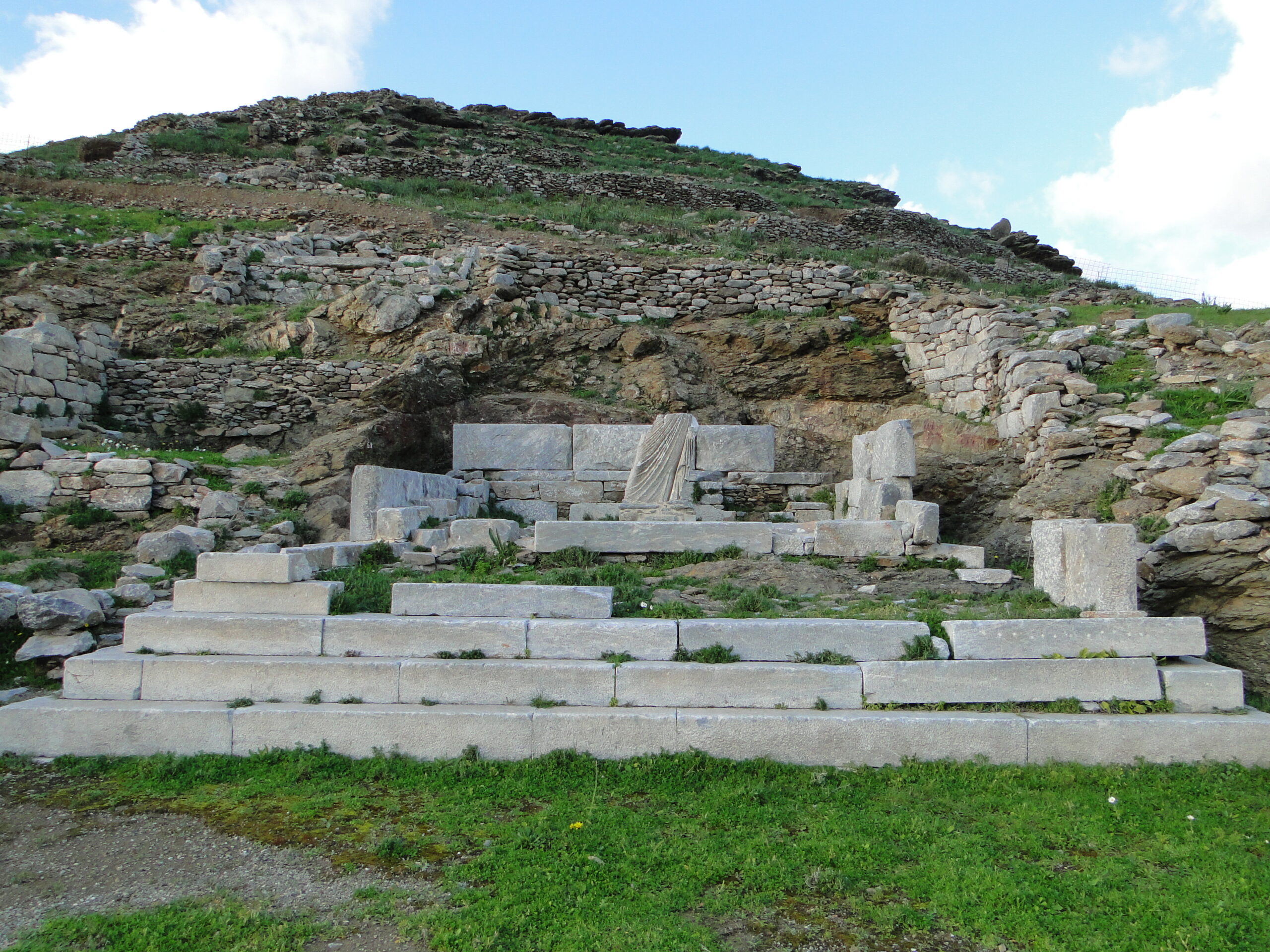
The main sight of Amorgos are the Tower of St. Triada in Arkesini and the ruins of ancient Minoan in Mount Moudoulia in Katapola.
Other important monuments are:
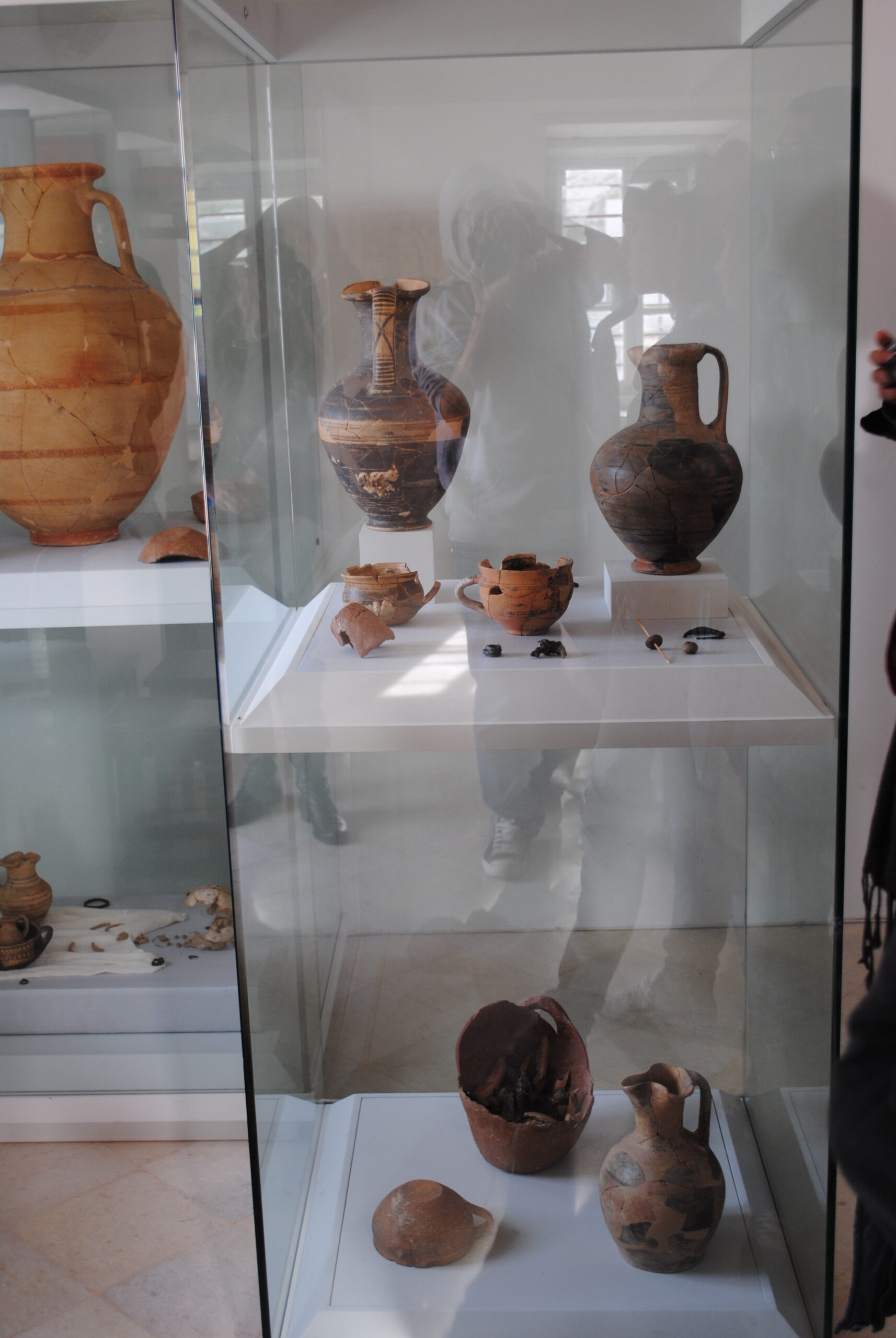
The churches of Agios Georgios Valsamitis and Agios Ioannis Theologos, The Castle at Chora, as well as the archaeological museum in Chora, which is housed in the beautiful Pyrgos of Gavras and awaits you to admire finds (sculptures, statues, ceramics, etc.) from all periods of development of the island.
Beaches
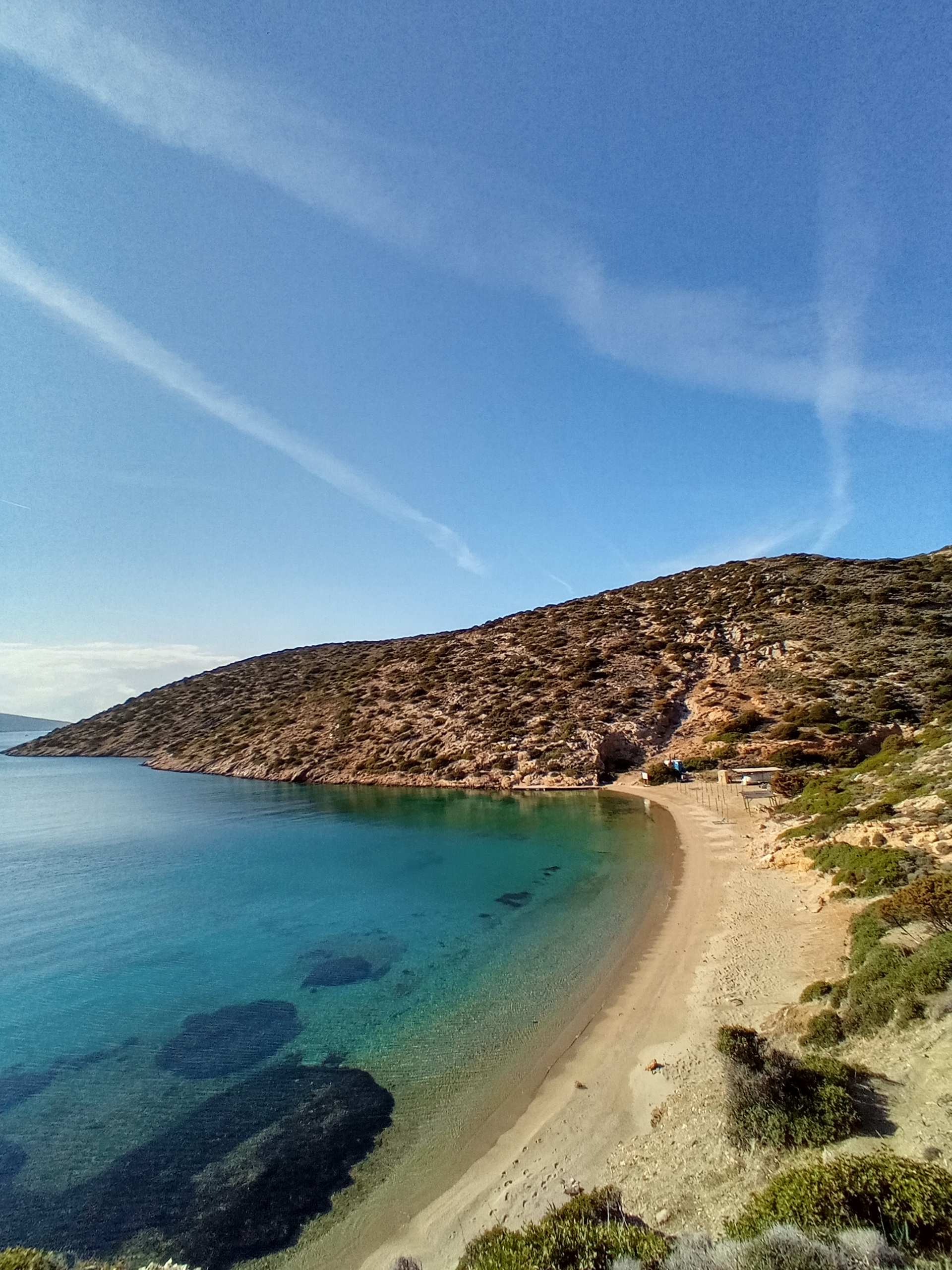
Amorgos is full of small beaches with sand or pebbles and clear blue waters.
In Katapola you will find the beaches of Kato Akrotiri and Agios Panteleimonas, as well as Maltezi and Plakes, which can be reached from the port pier by small boat.
In Aigiali you will find the beach next to the port, Levrosos beach and Psili Ammos.
Very close to Aigiali we find the beach of Agios Pavlos from where you can go by small boat to swim in the islet of Nikouria.
Near Chora you will find the famous beach of Agia Anna, while continuing towards the south side of the island we will meet the beach of Mouros and Paradisia.
At the southern end of the island there is the beach of Kalotaritissa from where you can take the small boat and cross to the islet of Gramvousa.
Destination Amorgos
Book Directly With Us
Lowest price guarantee / Secure deposit / 10% discount on Diasino Car rental